Before You Scale Ad Spend, Fix the Funnel
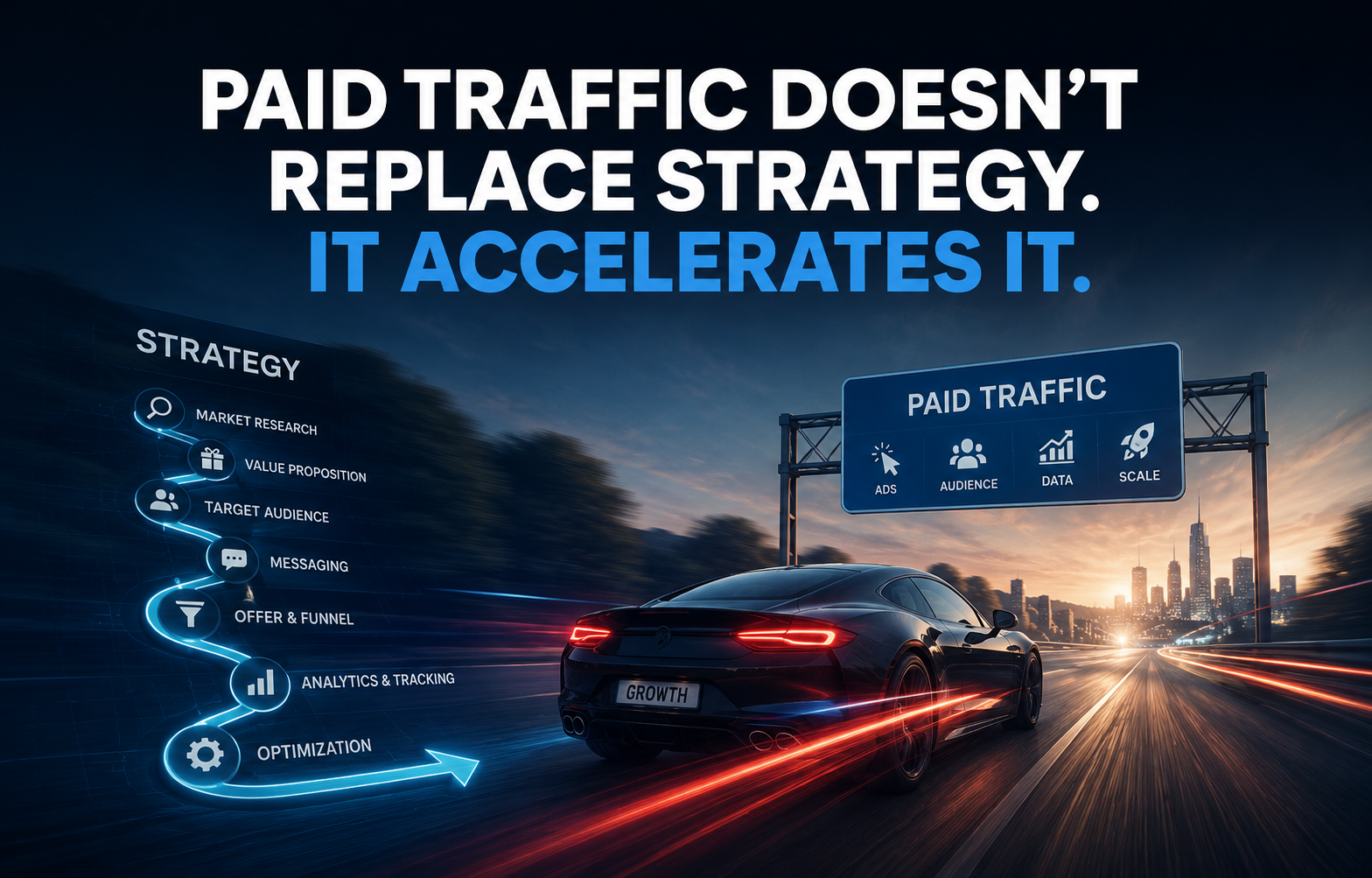
When paid campaigns start generating results, the next move often seems obvious: increase the budget.More spend. More traffic. More leads. More revenue.At least, that's the assumption.But scaling advertising before understanding how the entire funnel performs can turn small inefficiencies into expensive problems.Before you scale traffic, make sure your funnel is ready to handle it.
More Traffic Won't Fix Conversion Problems
Imagine a campaign generates 10,000 visitors and converts 2% of them into leads.
Doubling the advertising budget might bring 20,000 visitors. But if the same conversion problems remain, you're simply paying to send more people through an inefficient funnel.
The smarter question isn't:
“How can we get more traffic?”
It's:
“How can we get more value from the traffic we already have?”
Sometimes improving conversion performance creates more growth than increasing media spend.
Find the Leaks Before Adding Volume
A marketing funnel is rarely one single conversion point.
It includes the ad, landing page, form, follow-up process, sales interaction, and ultimately the customer.
Every stage can create friction.
A campaign may generate strong click-through rates while the landing page underperforms. The landing page may generate leads while lead quality remains poor. Qualified leads may enter the pipeline but fail to convert because follow-up is too slow.
Looking only at platform metrics makes these problems easy to miss.
That is why effective performance marketing requires visibility across the entire customer journey.
Measure What Happens After the Click
Clicks and impressions tell you whether advertising is attracting attention.
They don't tell you whether the business is growing.
To understand real performance, businesses need to connect advertising data with downstream metrics such as:
- Landing page conversion rate
- Cost per qualified lead
- Lead-to-opportunity rate
- Customer acquisition cost
- Sales conversion rate
- Revenue generated by channel
This changes the conversation from “Which campaign gets the cheapest clicks?” to “Which campaign creates the most valuable customers?”
And that's a much better question.
Optimize First. Scale Second.
Scaling should be the result of a working system—not an attempt to fix one.
Before increasing budgets, identify where prospects drop off, test improvements, validate tracking, and understand which channels actually contribute to revenue.
Then scale what works.
Because sustainable growth isn't about sending the maximum amount of traffic into a funnel.
It's about building a funnel worth sending more traffic to.
Fix the leaks. Prove the economics. Then accelerate.